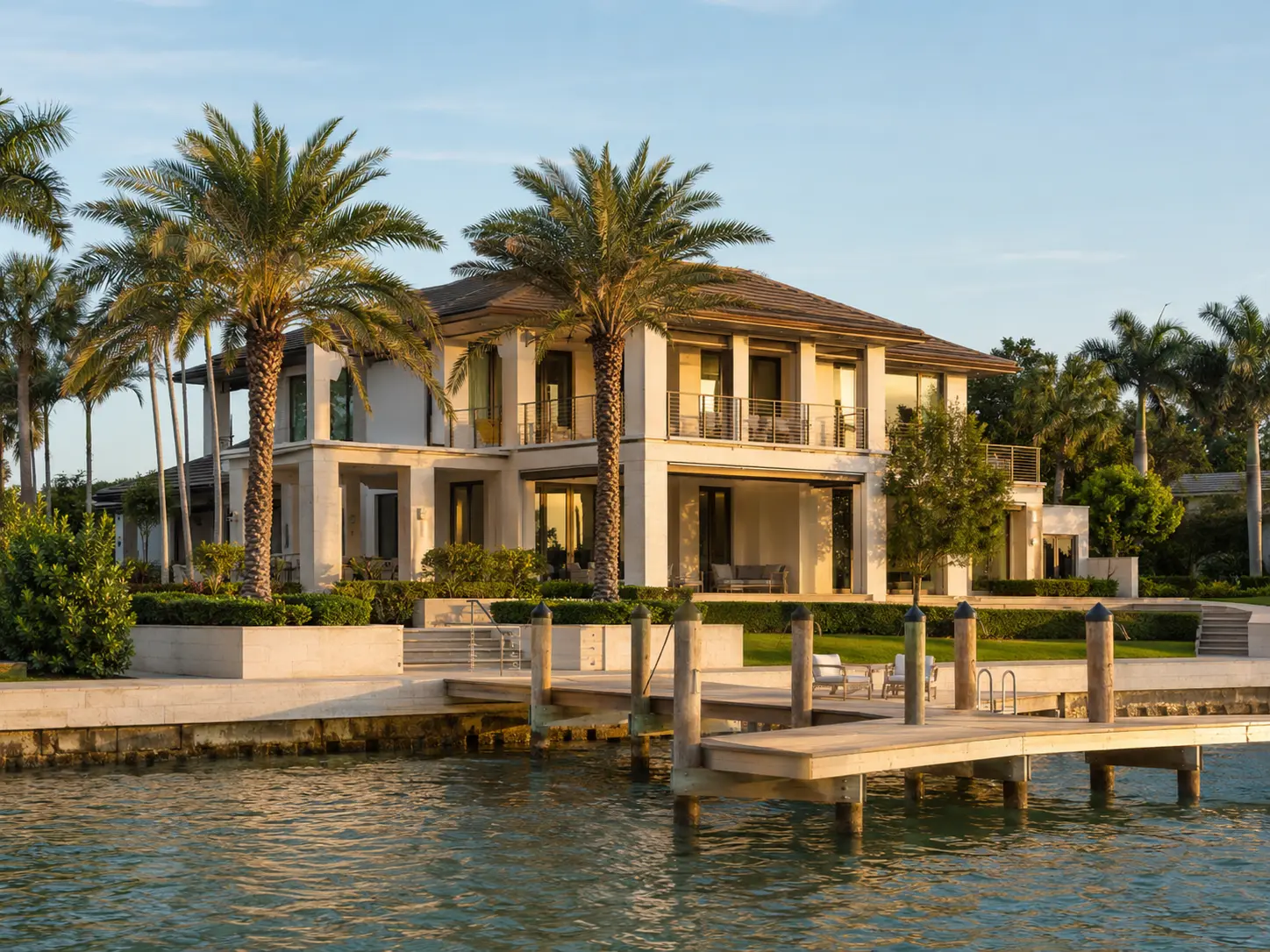
Waterfront buyer's guide
Waterfront is a category,
not a single market.
Ocean, Intracoastal, river, and canal properties in the northern Palm Beaches behave differently — in lifestyle, in carrying costs, and in what deserves scrutiny before you sign.
Buy the water first, then the house.
In Jupiter, Tequesta, Juno Beach, and the surrounding northern Palm Beaches, the water a property sits on shapes everything: what you pay, what you insure, what you maintain, and what the home resells for. Two houses of identical size can be entirely different purchases because one faces the open Intracoastal and the other sits on a dead-end canal with a fixed bridge between it and the inlet.
This guide walks through the four things experienced waterfront buyers evaluate before falling in love with a kitchen: the water itself, the marine structures, the flood and insurance picture, and the current coastal market context.
Access defines value on the northern waterfront.
The northern Palm Beaches offer four broad waterfront types. Oceanfront delivers the view and the beach but no private dockage. Intracoastal frontage combines open-water views with boating access. The Loxahatchee River and its tributaries offer a quieter, more natural setting. Canal-front homes are often the most attainable path to a private dock — with the widest variation in quality.
For boaters, the questions that move value are practical: how many minutes to the Jupiter Inlet, is the route through no-wake zones, what is the controlling water depth at low tide, and do any fixed bridges limit the vessel height the property can serve? A dock that fits your boat today — and the boat you actually want next — is worth verifying on the water, not from the listing photos.
Explore the Jupiter guide →Docks, seawalls, and lifts are part of the purchase.
Marine structures are improvements with their own condition, permits, and replacement cost — inspect them like you would a roof.
What to verify during the inspection period
Commission a marine inspection alongside the general home inspection. Seawalls have a service life, and replacement is a six-figure project on many lots; signs of rotation, cracking, or soil loss behind the wall deserve a specialist's opinion. Docks and boat lifts should match their permits — confirm with the town or county that existing structures were permitted and closed out, because unpermitted marine work becomes the buyer's problem after closing.
Ask for the dock's specifications in writing: length, water and power service, lift capacity, and any submerged-land lease or riparian considerations. If the property is in a community with an association, confirm what the association owns and maintains versus what transfers with the home.
Price the full cost of ownership before you offer.
Insurance is a carrying cost that varies dramatically between waterfront properties — build it into your comparison, not your afterthoughts.
FEMA flood zones (and the property's elevation certificate, if one exists) drive flood-insurance pricing.
Flood coverage is separate from homeowners insurance — NFIP or private-market, often both worth quoting.
Roof age, opening protection, and wind-mitigation features meaningfully change premiums.
Get real quotes during due diligence
Premiums for two similar coastal homes can differ by thousands of dollars a year based on elevation, construction year, and mitigation features. Order actual insurance quotes — homeowners, flood, and wind — during the inspection period, while you can still adjust your position. An elevation certificate, a recent roof, and documented mitigation features are worth real money and are fair questions to put to the seller.
Thin inventory keeps well-priced waterfront moving.
Q2 2026 figures for the Jupiter Island–Singer Island coastal stretch, as reported in Corcoran's quarterly coastal market report.
Coastal house sales
Jupiter Island to Singer Island, Q2 2026 year over year, per Corcoran
Single-family median
Flat year over year across the same coastal stretch
Active house listings
Down 13% — a thin coastal selection
Condo median
Up 22% year over year in the coastal corridor
What the numbers mean for a waterfront buyer
House sales along the coastal stretch rose 19% year over year in the second quarter while active single-family inventory fell to roughly one hundred listings — a thin selection spread across very different water types and price points. Median pricing held steady at $2.0 million even as coastal condo medians climbed. In practice: when the right dock, depth, and exposure line up, that specific property rarely has a true substitute, and prepared buyers move decisively while unprepared buyers start their insurance and marine research too late.
Six questions before any waterfront offer.
What is the realistic time-to-inlet for the boat I own or want? What is the controlling depth at low tide? When were the seawall and dock built, inspected, and permitted? What will homeowners, flood, and wind coverage actually cost for this address? What has comparable waterfront — not comparable square footage — sold for? And what would this lot be worth if I had to rebuild the improvements?
Waterfront in the northern Palm Beaches rewards exactly this kind of specificity. The lifestyle is the reason to buy; the due diligence is the reason the purchase still looks smart ten years later.